
Nazarene General
Hospital
Papua New Guinea, Asia

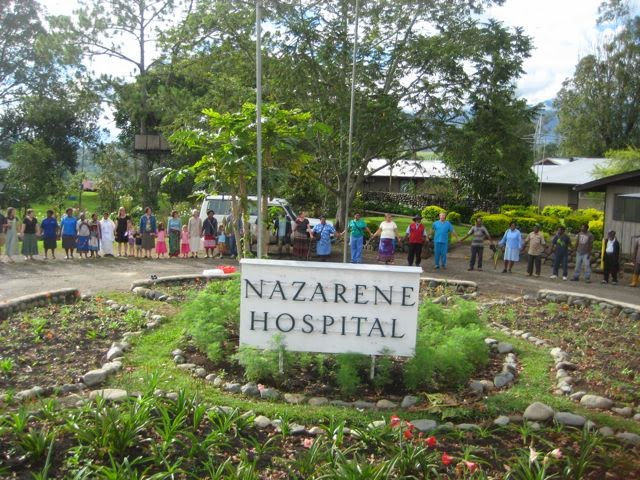


Origin Story & Hospital Summary:
Nazarene General Hospital, formerly known as Kudjip Nazarene Hospital, was founded in 1967 by the International Church of the Nazarene. Located in the rural Jiwaka Province of Papua New Guinea (PNG), the hospital serves as both a primary care facility and a referral center. The nearest small town is about 15 minutes away, and the closest significant commercial center is about an hour's drive.Nazarene General Hospital is a 134-bed facility providing comprehensive medical services, including medical, surgical, obstetrical, pediatric, emergency, and trauma care. The hospital maintains an occupancy rate of around 80%. Trauma care accounts for about 15% of the hospital's workload due to tribal and family violence or accidents. The outpatient department is very busy, with around 60,000 visits annually, serving as the primary access point for patients needing specialized care. The hospital also has five wards: pediatric, surgical, medical, obstetric, and tuberculosis, with around 500 admissions per month.
Technology & Capacity:
The hospital is equipped with both fixed and portable X-ray machines, laboratory facilities including hematology, serology, chemistry, microscopy, and blood banking. It also has two operating theaters and a minor procedure room. However, there is no physical therapy department. The hospital occasionally faces challenges in maintaining a reliable supply of medicines due to inconsistent government supplies, but supplements these with shipments from the U.S.
Church and Governance:
Operated by the Church of the Nazarene, the hospital's mission is to make Christlike disciples through excellent medical care. The hospital is recognized as a Provincial Referral Hospital, the only church-run hospital in PNG to receive this designation. The mission emphasizes spiritual care, with daily ward devotions, evangelization, and counseling provided by hospital chaplains.


Training Opportunities:
The hospital offers training for its own nursing students and provides international rotations for medical students and residents. Training programs include internships for PNG medical students and Rural and Remote Medicine Doctors. Visiting volunteers are expected to participate in teaching rounds and classroom instruction.
Medical and Support Staff Needs:
Family Medicine
Pediatrics
General Surgery
OB/GYN
Emergency Medicine
Language:
While many languages and dialects are spoken in PNG, Melanesian Pidgin is the trade language, and English is widely used by the hospital staff.
Housing & Food:
Housing is provided in the form of houses, duplexes, or apartments. Volunteers are responsible for their own food and shopping. Fresh vegetables and basic groceries are available at the local market and stores, though some items may be more expensive than in the U.S. and ready-made items are scarce.
Travel:
Volunteers typically fly into Port Moresby and then take a domestic flight to Mt. Hagen, followed by a 45-minute drive to the hospital. The hospital staff provides transportation from the Mt. Hagen airport.
Time Difference:
PNG operates on Papua New Guinea Time, which is UTC+10.


People and Local Religion:
The local population consists primarily of subsistence farmers with a typical income of $13 to $27 per week. Christianity, particularly through the Church of the Nazarene, plays a significant role in the community.
Climate:
Despite being near the equator, the altitude of 5000 feet gives the region a temperate climate. Daytime temperatures average around 80°F, while nighttime temperatures range from 55°F to 65°F. The region experiences a rainy season, but the climate remains relatively wet year-round.
Unique Challenges:
Common health issues include infectious diseases, trauma from violence, and maternal health concerns. Cardiovascular diseases and cancers are less common. The hospital occasionally struggles with inconsistent medical supply chains.
Evangelism Opportunities:
The hospital provides numerous opportunities for evangelism through its medical services and community health programs. Hundreds of people come to Christ each year through the hospital's ministry, and the staff actively engages in spiritual outreach and counseling.